Posted on November 10, 2026
Every November, communities across North Georgia gather to honor the men and women who wore the uniform of our Armed Forces. From the foothills of Cherokee County up through Dawson, Pickens, Gilmer, and Fannin, military heritage runs deep. As a North Georgia real estate broker, I see Veterans Day not just as a day to pause and say thank you, but as a reminder that service members deserve concrete, practical advantages when buying a piece of ground to call their own.
Many active-duty service members, National Guard members, Reservists, and veterans leaving the military do not realize how much financial leverage they possess in Georgia’s housing market. Between federal zero-down mortgage programs, competitive interest structures, and substantial state property tax exemptions, the path to homeownership in Georgia is uniquely supportive of military families.
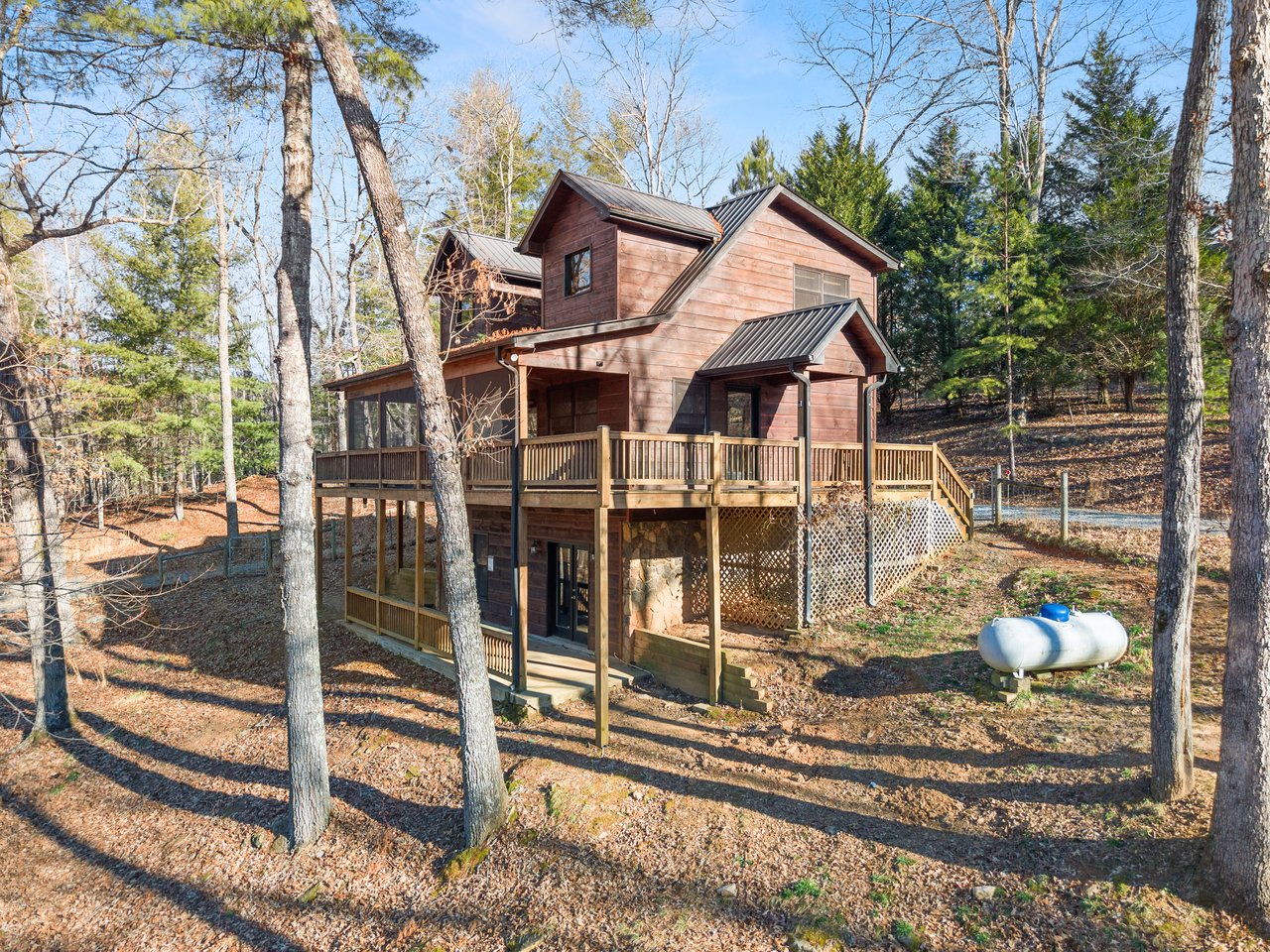
Whether you are looking to purchase a quiet cabin in Blue Ridge, an acreage property in Ellijay or Jasper, or a suburban home in Canton, Woodstock, or Cumming, here is an in-depth breakdown of how your benefits work on the ground in Georgia.
The VA Loan Advantage: Zero Down and Long-Term Savings
The Department of Veterans Affairs does not directly lend you money for a home purchase; instead, it backs private mortgage lenders against default. That government guarantee removes the traditional barriers that often sideline civilian buyers, especially in a market where saving a 10% to 20% down payment takes years. The most valuable terms built into the VA home loan include:
True Zero Down Payment Financing: Unlike conventional loans requiring down payments or FHA loans requiring at least 3.5%, eligible borrowers with full entitlement can finance 100% of the purchase price. You keep your emergency funds, investment accounts, and cash reserves intact.
No Private Mortgage Insurance (PMI): On standard loans, putting down less than 20% triggers mandatory monthly mortgage insurance, which can easily add $150 to $350 or more to your monthly payment without paying down a cent of your principal balance. VA loans completely bypass ongoing monthly mortgage insurance.
No Cap with Full Entitlement: For buyers with their full entitlement available, the VA does not enforce arbitrary maximum loan limits. You can borrow as much as an approved lender qualifies you for based on your income, debt-to-income (DTI) ratio, and residual income requirements.
Funding Fee Exemptions for Service-Connected Disability: Most borrowers pay a one-time VA funding fee at closing (which can be rolled into the loan balance). However, if you receive VA disability compensation for a service-connected condition (or are an eligible surviving spouse), that entire fee is completely waived.
Competitive Interest Rates: Because the federal government partially guarantees the note, lenders face less risk, allowing them to offer lower baseline interest rates compared to equivalent conventional mortgage products.
Basic Eligibility: Who Can Use the Benefit?
Eligibility comes down to active-duty service time, reserve duty, or discharge characterization. Obtaining your Certificate of Eligibility (COE) through the VA or directly via your mortgage broker is the first step to verifying your status. General qualifying criteria for VA home financing include:
Wartime Active Service: At least 90 consecutive days of active-duty service during recognized wartime eras.
Peacetime Active Service: At least 181 continuous days of active service during peacetime periods.
National Guard and Reserve Service: A minimum of six years of service in the Selected Reserve or National Guard, or at least 90 days of active-duty service under Title 32 orders.
Discharge Character: Service completed under conditions other than dishonorable.
Surviving Spouses: Unremarried spouses of service members who died in the line of duty, or whose death resulted directly from a service-connected disability, are eligible for full VA loan benefits.
What to Know About VA Appraisals and Minimum Property Requirements
There is a persistent myth that VA loans are difficult to close, or that sellers avoid them because of inspection hassles. In reality, a seasoned local real estate agent knows how to navigate VA guidelines smoothly.
The VA appraisal serves two functions: establishing fair market value and verifying that the home meets the VA’s Minimum Property Requirements (MPRs). The goal is simple: ensure that the home is safe, sanitary, and structurally sound. Items that commonly flag on a North Georgia VA appraisal include:
Peeling Exterior Paint: Any chipped or peeling paint on homes built before 1978 flags automatic lead-based paint containment rules.
Roof Life Expectancy: The roof must be in functioning condition with reasonable remaining useful life, free of leaks.
Handrails and Step Safety: Decks and stairways with three or more risers generally require stable handrails, a frequent fix on mountain cabins and sloped North Georgia properties.
Water Well and Septic Distance: Mountain or rural properties utilizing private wells must meet clear separation distances from drain fields, and private well water must pass a standard potability test.
Functioning Utilities and Crawl Spaces: Crawl spaces must be dry and free of standing water, and all heating, cooling, and plumbing systems must be fully operable.
Addressing these items upfront in contract negotiations prevents delays and keeps your transaction moving forward toward a clean closing.
Georgia Property Tax Exemptions for Veterans
Once you hold the deed to your property, the financial advantages of owning a home in Georgia continue. The state of Georgia offers several levels of ad valorem homestead exemptions for residential properties, with significant protections carved out for qualifying disabled veterans.
Georgia calculates property taxes using an assessed value, which is 40% of the county’s determined fair market value. Reductions to this assessed value translate into substantial dollar savings on county, city, and school taxes every single year. The primary exemption pathways available across Georgia include:
The 100% Disabled Veteran Homestead Exemption (O.C.G.A. § 48-5-48): Available to honorably discharged veterans rated 100% permanently and totally disabled by the VA, or those compensated at the 100% rate due to Individual Unemployability (TDIU), as well as those receiving statutory awards for the loss or loss of use of limbs or eyesight.
Inflation-Indexed Exemption Ceiling: The statewide statutory exemption ceiling adjusts annually based on federal cost-of-living and construction cost index metrics. For the 2026 tax year, the exemption amount covers up to $126,526 of assessed value. Because homes are assessed at 40%, this effectively exempts roughly $316,000 of fair market value from all ad valorem taxation—state, county, municipal, and school.
Surviving Spouse Continuity: Unremarried surviving spouses and surviving minor children of qualified disabled veterans retain the exemption on the primary residence, provided they continue living in the home.
No Age or Income Restrictions: Unlike standard senior homestead exemptions that require you to meet strict income caps or age thresholds, Georgia’s disabled veteran homestead exemption has zero income tests and no age limits.
Standard and County-Level Homestead Reductions: Veterans who do not carry a 100% VA rating or TDIU status are still entitled to Georgia’s baseline homestead exemption on their primary home, alongside specific county or school tax exemptions that differ by jurisdiction across North Georgia.
Step-by-Step: How to Claim Your Georgia Tax Exemption
Homestead tax exemptions in Georgia are not granted automatically at the closing table; you must file with your local county government. The administrative filing steps are straightforward:
Verify Ownership as of January 1: In Georgia, you must own and occupy the home as your legal, primary domicile on January 1 of the tax year for which you are applying.
File Before the Local Deadline: Applications must be submitted to your County Tax Commissioner or Board of Assessors between January 1 and April 1 (some counties offer extended windows through June, but April 1 is the standard safe target statewide).
Provide Your Documentation: Bring your recorded warranty deed, a copy of your valid Georgia driver’s license reflecting the property address, Georgia motor vehicle registration, and your official VA disability summary letter detailing your service-connected disability rating or unemployability status.
Track Your Annual Status: Once approved, permanent service-connected exemptions generally roll over automatically year after year, though you should notify your county assessor immediately if you transfer ownership, refinance the deed, or change your primary residence.
Navigating military mortgage benefits, appraisal nuances, and local county tax assessors does not have to be complicated. Whether you are actively serving, transitioning back into civilian life, or settling into retirement in the North Georgia mountains, taking full advantage of the programs built for you ensures you build equity on the strongest possible foundation. The communities of North Georgia remain deeply grateful for your service, and finding your place here is an honor to support.