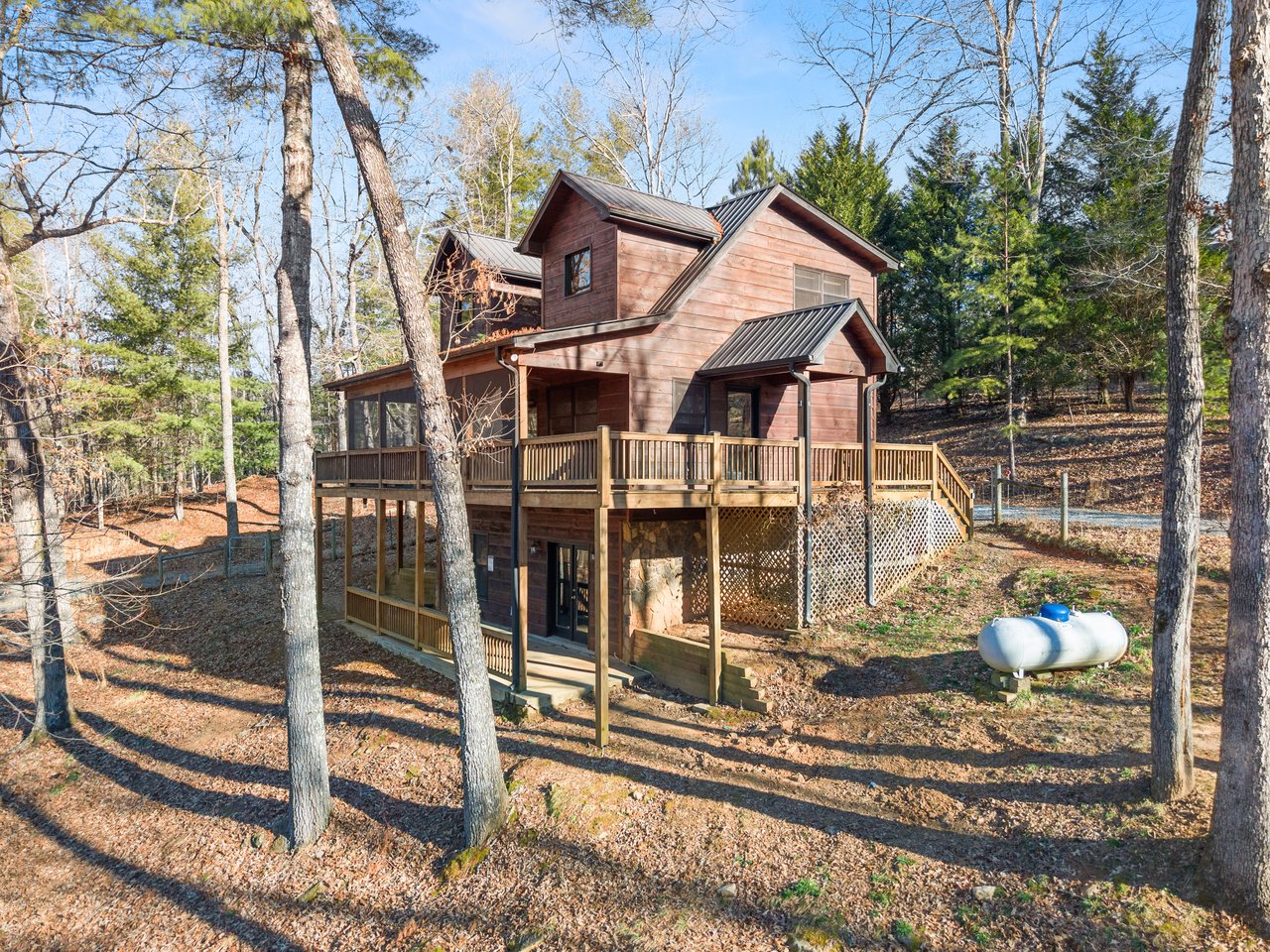
Powering Your Mountain Retreat: A Buyer’s Guide to Propane, Generators, and Rural Utilities in North Georgia
Posted on November 19, 2026
Welcome to the North Georgia mountains—where the air is crisp, the views are endless, and the distance from city life is exactly what you've been searching for. Whether you are hunting for a weekend getaway cabin in Blue Ridge, a sprawling homestead in Ellijay, or a high-ROI off-grid investment property tucked away near the Chattahoochee National Forest, buying rural real estate up here is a dream come true.
But as a licensed North Georgia real estate broker, I always have to walk my clients through the practical side of mountain living that doesn't quite make it into the glossy listing photos. When you leave the city limits, you also leave behind municipal water and rock-solid grid reliability. Heavy winter ice storms, fallen trees across power lines, and remote locations mean that setting up your rural utilities correctly isn’t just a luxury—it’s an absolute necessity to protect your property and your peace of mind. Let's dive into exactly what buyers and investors need to know about propane tanks, generators, and rural utility infrastructure before closing on a North Georgia mountain home.
Even if your dream cabin is tied to the local electric cooperative, mountain weather has a mind of its own. A heavy snow accumulation or a severe summer thunderstorm can easily knock out power for days at a time. If you're looking at raw land, getting the grid extended to your build site can be shockingly expensive. Here is how you should evaluate rural power infrastructure when touring properties:
Grid Extension vs. Off-Grid Costs: If you are buying vacant land, don't assume pulling power from the road will be cheap. Depending on the distance and the terrain, local utility companies charge a premium to run lines up a steep ridge. Sometimes, investing in a standalone off-grid solar and battery system actually makes more financial sense than paying for a mile of utility poles.
The Solar Potential: If you are leaning toward off-grid living or just want to supplement your grid power, ground-mount solar arrays frequently outperform roof mounts in our mountainous terrain. They allow you to clear a dedicated "sun-pocket" facing south or southwest, tilt the panels to shed snow and autumn leaves, and keep your actual cabin tucked safely in the cool shade of the forest.
Battery Storage Realities: Modern rural setups are moving away from legacy lead-acid batteries and relying on Lithium Iron Phosphate (LiFePO4) storage. These handle North Georgia's below-freezing winter nights much better without degrading and provide the constant voltage needed to run heavy household loads.
If there is one utility you’ll quickly become intimately familiar with in North Georgia real estate, it’s propane. Because natural gas pipelines rarely extend into our rural and high-elevation communities, liquid propane (LP) becomes the heavy lifter for heating, cooking, and running your backup power. Getting your propane setup right from day one will save you massive headaches come January. Keep these key factors in mind when looking at a home's fuel infrastructure:
Tank Sizing Matters: A whole-home generator pulling continuous loads during a three-day winter freeze will consume substantial fuel. Opting for a 500-gallon or even a 1,000-gallon bulk tank ensures you maintain several weeks of reserve power without panicking when the roads ice over.
Buried vs. Above-Ground Tanks: Burying your propane tank is the gold standard for mountain properties. Not only does it preserve the beautiful aesthetics of your wooded lot, but it also protects the tank from falling tree limbs. More importantly, the subterranean earth keeps the fuel at a stable temperature, maintaining consistent vapor pressure during those harsh freezing mountain snaps.
Winter Delivery Access: Mountain roads and steep gravel driveways can turn into solid sheets of ice during January and February storms. Local propane delivery trucks require manageable road grades and clear turnarounds. If your driveway is incredibly steep, late-autumn tank top-offs become a non-negotiable routine because the trucks simply won't be able to reach you in the dead of winter.
Dual-Fuel Versatility: Tying your backup generator, tankless water heater, kitchen range, and supplemental gas logs into the same central propane system is incredibly efficient. It reduces the electrical demand on your system, which is crucial if you are running on backup power or solar.
A standby generator isn’t just a convenience in rural North Georgia; it’s a critical insurance policy for your pipes, your well, and your overall investment. For real estate investors managing short-term rentals, a reliable generator is the difference between a five-star review and a heavily refunded booking when a storm hits. Here is what to look for when assessing a property's backup power:
Automatic Transfer Switches (ATS): You want a system that operates seamlessly. When the grid drops, an automatic standby generator (like a Generac, Kohler, or Cummins unit) wired to an ATS will fire up within seconds. You won't have to venture out into a storm with a flashlight to pull-start a portable unit.
Sizing for the Heavy Loads: North Georgia properties almost always depend on private wells drilled 200 to 500 feet deep through solid granite bedrock. Running a 240V submersible well pump demands a high surge capacity—often requiring a generator or inverter that can handle 10,000 to 12,000 starting watts just to manage the initial spike without tripping the system.
Smart Monitoring: Many modern utility-grade generators are Wi-Fi enabled. Whether you are living out of state or just down in Atlanta, you can monitor your generator's status, fuel levels, and maintenance needs straight from your smartphone or tablet.
You can't talk about rural power without talking about how it impacts your other essential daily utilities. When the power goes out in the mountains, it takes your running water and your internet connection with it unless you have planned ahead. Consider these final infrastructure details:
Powering the Well Pump: As mentioned, your deep-water well relies entirely on electricity. No power means no showers, no flushing toilets, and no running water in the kitchen. Ensuring your generator or solar inverter is specifically rated to handle the heavy draw of your well pump is step one in rural property due diligence.
Keeping the Internet Alive: Satellite internet (like Starlink) and fixed wireless services are the lifelines for remote workers and modern mountain homes. These systems draw very little power, but they still need to be plugged into an uninterruptible power supply (UPS) or tied to your standby generator so you don't lose connectivity during a blackout.
HOA and County Regulations: Always verify local zoning and Property Owners Association (POA) covenants before installing utility infrastructure. Some communities have strict guidelines on where solar panels can be placed, noise restrictions for generators, or setback requirements for buried propane tanks.
Making the leap to a rural property is one of the most rewarding real estate moves you can make, offering a level of privacy and natural beauty that is hard to find anywhere else. Understanding the nuts and bolts of mountain utility infrastructure doesn't have to be intimidating; it just requires a bit of foresight and the right boots-on-the-ground guidance. When you know what to look for—from buried propane lines to the surge capacity of a Generac—you can confidently invest in a property that is as resilient as it is beautiful, ensuring your slice of the mountains remains comfortable and fully powered in any season.
Stay up to date on the latest real estate trends.



With in-depth knowledge of the local market, skilled negotiation, and a client-first approach, Jacklyn works diligently to help buyers find the right home and sellers maximize the value of their property.
JACKLYN ZUNIGA
10900 Crabapple Rd Roswell, GA 30075