Posted on October 27, 2026
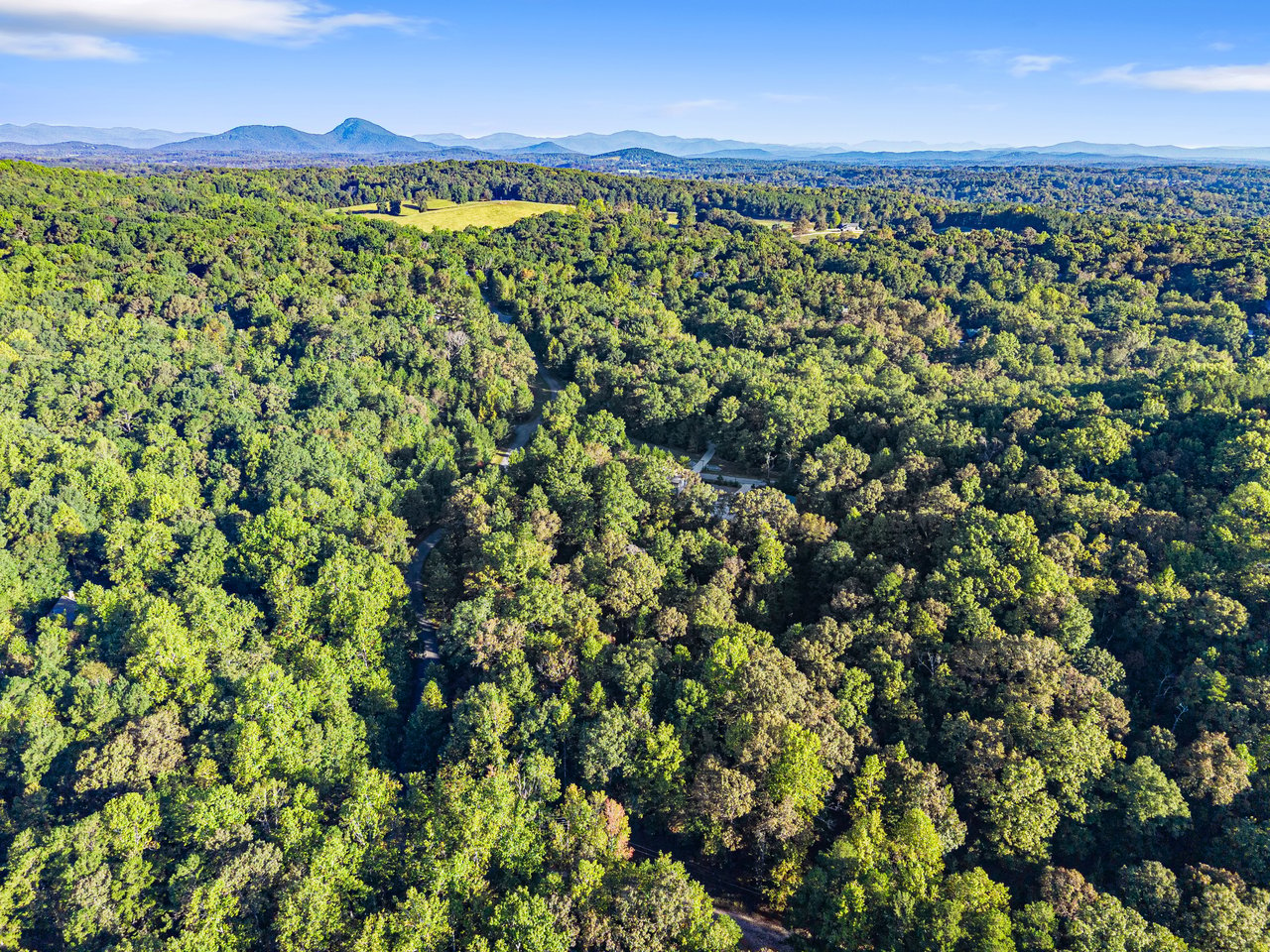
When you walk a tract of mountain land in North Georgia—whether it is twenty rolling acres in Ellijay, a timbered ridge in Blairsville, or a creek-front parcel outside Dahlonega—it is easy to get swept up in the panoramic views, the clear mountain air, and the quiet serenity. However, buying rural acreage requires looking past the surface. In real estate law, property ownership is not just the dirt you stand on; it is a "bundle of rights."
That bundle can be unbundled, divided, leased, or encumbered long before a property ever hits the market. Three of the most overlooked components of land transactions across the North Georgia mountains and foothills are mineral rights, standing timber value, and recorded easements. Overlooking any of these during your due diligence period can turn an idyllic mountain retreat into a costly legal dispute or leave thousands of dollars on the table.
Mineral Rights: Understanding the Subsurface Estate
Many buyers assume that purchasing a parcel of land automatically gives them total control from the center of the earth straight up to the sky. In Georgia, real property can be split into two distinct legal interests: the surface estate and the mineral (subsurface) estate. If a previous owner severed the mineral rights decades ago, you may own the trees, the soil, and the home site, but someone else could hold the legal right to extract minerals, stone, or hydrocarbons beneath your feet.
North Georgia has a rich geological and mining history. Lumpkin County was the epicenter of America’s first major gold rush in 1828, while Pickens County is world-renowned for its marble reserves. Throughout Cherokee, White, Union, and Gilmer counties, old mining claims, mineral reservations, and gravel rights are scattered through deed registries. Under traditional Georgia property principles, the mineral estate is often considered dominant to the surface estate, meaning the mineral rights holder has an implied right to enter the surface to access their subsurface resources, within reasonable limits. Before closing on rural acreage, take specific steps to verify the status of the subsurface estate:
Commission a specialized mineral title search: Standard residential title searches often go back 40 to 60 years. In rural Georgia, mineral severances frequently took place 80 to 150 years ago. A real estate attorney with land experience must trace the chain of title back to the original land grants to confirm whether the rights remain intact.
Inspect the warranty deed for reservation language: Review past conveyances for phrases like "excepting and reserving all oil, gas, and mineral rights unto the grantor." If that language appears without an expiration or reversion, the surface and minerals are separated.
Negotiate a Surface Use Agreement (SUA) if severed: If the mineral rights were severed and cannot be repurchased, an SUA legally restricts where, when, and how an extraction party can enter your property, protecting your homesite, access roads, and water sources.
- Check for statutory abandonment: Under Georgia law (O.C.G.A. § 44-5-168), surface owners may petition to regain severed mineral rights if the mineral owner has neither worked the rights nor paid property taxes on them for a continuous period of seven years.
Timber Value: The Overlooked Asset in the Canopy
A heavily wooded tract in North Georgia is far more than scenery; it is a living, appreciating financial asset. Whether your parcel is covered in mature white oaks, yellow poplars, and hickory in the higher elevations, or dense stands of loblolly and shortleaf pine on lower rolling ridges, standing timber carries substantial commercial value.
Many buyers mistakenly believe that trees simply come with the land and require no special accounting. Failing to evaluate timber can lead to two major pitfalls: overpaying for cut-over land or failing to establish a tax basis for future timber harvests. If you plan to clear a home site, put in a pasture, or manage the woodland for income, the standing timber should be formally inventoried prior to closing. Evaluating the timber on a prospective North Georgia property involves several key considerations:
Order a professional timber cruise: For tracts over ten to fifteen acres with mature forest cover, a registered consulting forester can perform a cruise. They calculate the merchantable volume, board feet, and species breakdown, giving you an accurate dollar valuation of the standing wood.
Establish a timber tax basis: At closing, your forester and CPA can allocate a specific portion of your total purchase price directly to the timber basis. When you harvest trees later—whether for management or site clearing—you only pay capital gains tax on the growth value above that initial basis, saving thousands in taxes.
Verify timber deeds and timber leases: Always check that the seller has not pre-sold the timber rights via an unexpired timber deed. It is entirely legal in Georgia for a seller to reserve cutting rights, meaning loggers could harvest the forest months after you take title.
- Explore CUVA enrollment: Georgia’s Conservation Use Value Assessment (CUVA) provides a 10-year covenant offering significant property tax reductions for timberland and agricultural property. If the land is already enrolled, you must maintain compliance to avoid substantial clawback penalties.
Easements and Access: Protecting Your Property Boundaries
In the mountainous terrain of North Georgia, access is never something you can take for granted. Ridge lines, steep hollows, rushing trout streams, and national forest borders mean roads rarely follow neat grid patterns. An easement grants another party the legal right to use a specific portion of your property for a defined purpose—or grants you the right to cross someone else's land to reach your own.
A parcel without clear, deeded, insurable access is effectively landlocked, rendering it unbuildable and ineligible for standard financing. Conversely, purchasing land that is crisscrossed by utility corridors, shared driveway agreements, or public recreational rights-of-way can drastically restrict where you can build, drill a well, or install a septic system. When assessing easements on North Georgia land, focus on these critical categories:
Deeded access easements: If the parcel does not touch a county-maintained public road, you must have an express, recorded right-of-way across adjacent properties. Ensure the easement language explicitly permits utilities, emergency vehicle access, and runs with the land rather than terminating with the prior owner.
Utility and pipeline easements: Companies like Georgia Power, Amicalola EMC, or regional municipal water authorities often hold broad rights-of-way. These easements typically forbid building permanent structures, planting certain trees, or altering grades within the designated corridor.
Prescriptive easements and old logging roads: In Georgia, continuous, uninterrupted, and adverse use of an improved private path for seven years (or twenty years for wild lands) can establish a prescriptive easement. Walk the boundaries to identify well-worn paths, ATV trails, or old logging routes that neighbors might claim a legal right to use.
- Conservation easements: Thousands of acres across the Blue Ridge foothills are permanently preserved through land trusts. While conservation easements offer tax benefits, they strictly dictate building limits, subdivision rights, tree removal, and commercial activities.
The Due Diligence Action Plan for Mountain Land Buyers
Navigating rural acreage transactions requires a different approach than purchasing a suburban home in a planned subdivision. Because physical boundaries, subsurface ownership, and legal access are uniquely complex in rural Georgia, your contract must allow adequate time for proper inspections. To safeguard your investment, complete these core verification steps before removing your due diligence contingency:
Obtain an updated boundary and topographical survey: Never rely on tax maps, GIS layers, or old fence lines. A licensed Georgia surveyor will locate legal pins, confirm true acreage, mark recorded easements, and identify encroachments before you commit.
Review title commitments for schedule B exceptions: Work with a local closing attorney who routinely handles rural acreage. Pay close attention to exceptions regarding mineral reservations, timber contracts, water rights, and access limitations.
Draft a detailed road maintenance agreement: If your access relies on a private gravel road shared by multiple property owners, ensure there is a recorded agreement outlining how repair costs, gravel replenishment, and grading expenses are shared.
- Conduct a Level 3 soil test: Before finalizing plans for homesites, confirm that the ground between existing easements and topographical setbacks can support a primary and reserve septic drain field.
Land ownership in North Georgia offers unmatched lifestyle and financial rewards, from long-term timber returns to the quiet permanence of a mountain homestead. Protecting that investment simply comes down to understanding every layer of the deed—from the bedrock beneath the soil to the treetops, and every recorded boundary line in between. Having an experienced, locally focused team of land professionals in your corner ensures that the ground you purchase remains everything you envisioned.