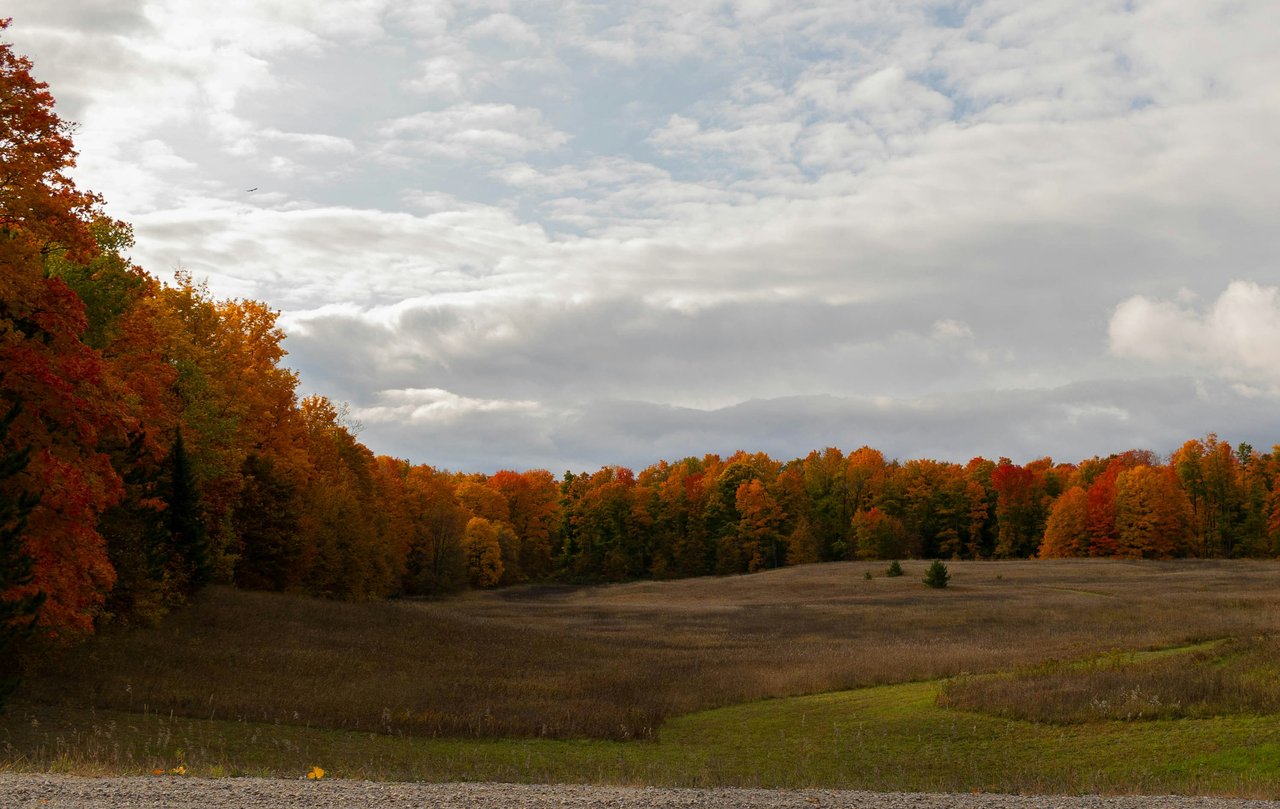
Labor Day Market Pulse: Why Fall Is Prime Time to Buy Agricultural & Homestead Land in North GA
Posted on September 7, 2026
Labor Day traditionally signals the end of summer, but in North Georgia land real estate, it marks the opening bell for prime acreage hunting. As foliage thins and temperatures drop across Gilmer, Lumpkin, Fannin, and Dawson counties, buyers looking for homesteads or agricultural property gain advantages that summer shoppers simply miss.
Unmatched Visibility of the True Landscape
Summer canopy looks beautiful, but thick vegetation hides drainage issues, rock outcroppings, and slope irregularities. Evaluating unimproved acreage between September and November gives you a transparent look at the land's natural bones.
Tree lines and boundaries: Leaf drop makes property markers, old fence lines, and timber paths easier to trace without fighting heavy brush.
Water flow and runoff: Early fall weather reveals natural springs, low-lying drainage paths, and actual creek flow levels during lower-water seasons.
Sunlight exposure: Shorter daylight hours show how natural light hits potential build sites, solar setups, or garden plots during the months when exposure matters most.
Favorable Buyer Conditions and Market Pace
The frantic summer market often drives impulse decisions on mountain retreats. Fall shifts the dynamic back toward practical land buyers and sellers who are ready to negotiate on acreage, pastures, and farm tracts.
Motivated sellers before tax year-end: Property owners who listed earlier in the year are often eager to close before year-end property taxes come due or before winterizing structures.
Less retail competition: Vacation-home shoppers pull back after Labor Day, leaving raw acreage and mini-farms open to focused homesteaders and land investors.
Better contractor availability: Fall provides a practical window to line up local excavation crews, well drillers, and soil scientists before the spring building rush creates long waiting lists.
Mastering the Online Land Search: What to Flag Before You Drive
When scrolling through land listings online or browsing social media for that perfect homestead, it is incredibly easy to get caught up in scenic mountain views. However, a savvy land investor looks for specific data points before ever scheduling a tour.
Zoning and deed restrictions: Look for terms like "unrestricted land," "no HOA," or "agricultural zoning." Many buyers want to build barndominiums, park RVs, or raise livestock, only to find out hidden covenants prohibit them.
Utility accessibility: Getting off-grid is a popular dream, but if you need modern amenities, check the listing for proximity to grid power and fiber optic internet. Running power half a mile up a mountain road can easily blow a budget.
Topography maps: In the Blue Ridge Mountains, a 10-acre parcel might only have one flat acre of buildable space. Learning to read contour lines on a topo map helps you avoid driving out to see a property that is essentially a sheer cliff.
Boots on the Ground: What to Inspect During Your Property Tour
Touring raw land in the Appalachian foothills is vastly different than walking through a residential subdivision. When you finally step foot on the dirt, you have to look past the scenery and evaluate the property's practical functionality.
Road access and easements: Find out if the road leading to the property is county-maintained or a private dirt road that requires a 4x4 vehicle. You also need to verify if there are any shared driveways or deeded easements crossing through your potential homestead.
Water features and flood zones: A babbling creek is a major selling point, but you need to assess if it is a year-round stream or just seasonal runoff. Additionally, make sure your intended build site sits safely above the floodplain.
Soil quality and perk tests: If you are buying rural acreage, you will likely be on a septic system. Never assume land will support a septic tank just because it looks flat. Ask if a Level 3 soil test (perk test) has already been completed, or negotiate to have one done during your due diligence period.
A Head Start on Spring Homesteading
Buying agricultural property in autumn means you are not playing catch-up when planting season arrives in April. The months following Labor Day allow you to establish basic infrastructure while the ground remains workable.
Soil testing and pasture prep: Fall soil sampling allows lime, compost, and cover crops to break down in pasture soil over winter, boosting fertility for spring crops.
Fencing and clearing: Cooler weather makes brush cutting, timber management, and post-hole digging far more manageable than doing the same work in July heat.
Site infrastructure: Laying down gravel driveways, installing culverts, and pulling utility runs during drier fall weeks keeps your build site stable before winter rain turns unpaved roads into mud.
Walking raw acreage with a critical eye during autumn offers clarity that photos and satellite maps simply cannot deliver. Observing natural water flow, evaluating soil texture, verifying legal access, and tracing boundary lines in the clear fall light provides the practical insight needed to make a solid, generational land investment in the North Georgia mountains.
Stay up to date on the latest real estate trends.


With in-depth knowledge of the local market, skilled negotiation, and a client-first approach, Jacklyn works diligently to help buyers find the right home and sellers maximize the value of their property.
JACKLYN ZUNIGA
10900 Crabapple Rd Roswell, GA 30075